Friday, 14 June 2019

Handling Negative Emotions in a Way that’s Good for Your Team


It’s normal to experience emotions at work: frustration, anger, fear, excitement. But how leaders handle these feelings can go a long way toward building — or destroying — a strong workplace climate and motivating — or discouraging — employees. It’s essential that leaders develop the ability to regulate their emotions, but perhaps not in the way you might think.

Take this scenario: A soccer team is playing in a critical game and is down by one goal. Just before half-time, a player gets fouled in the box and the team is given a penalty kick — a great opportunity to tie up the score. A leading player on the team steps up to take the shot. At first, it appears perfect as it soars to the corner of the net but instead it rebounds off the goalpost back towards the stunned player. Head in his hands, he walks off the field to meet his team for their half-time meeting.

The team is upset. The coach is too. The coach’s goal is to get the players over this hump, ready to return to the field feeling pumped and motivated. Should he master his frustration, put on a fake smile, and not discuss the incident? Or should he be honest and fully express his feelings? Which one of these is going to help him meet his goal?

Neither, it turns out.

Leaders Who Regulate Well, Do Well

Research on emotional regulation suggests that the coach’s ability to manage his emotions will determine team morale and motivation. Of all of the facets of emotional intelligence, emotion regulation may be the “master skill,” explains Marc Brackett, director of the Yale Center for Emotional Intelligence and author of the book, Permission to Feel.

But how a leader manages emotions is critical in determining whether the outcome for the team will be positive or negative. Research has found that people tend to regulate their emotions in one of two ways: suppression or reappraisal.

Suppression is what most people do: hide their feelings and pretend not to feel upset. While this is a popular strategy, it actually leads to a host of negative outcomes for the person: fewer close relationships, more negative emotions, less social support, lower satisfaction with life, poorer memory, and elevated blood pressure. In addition, research has shown that suppressing emotions elevates other people’s stress response. If the coach hides his anger, for example, the blood pressure of those on his team is likely to rise. They may not consciously know that he is angry since he doesn’t appear to be, but they are physiologically registering this inauthenticity and it is setting off an alarm.

Given the negative impacts of suppression, you might think that fully expressing our emotions may be a more effective strategy. Doing so, however, could also have destructive consequences. If the coach fully expressed the frustration he was feeling in the moment, he probably would have destroyed the confidence of his players. Instead of inspiring connection and motivation, he would likely leave the players feeling fearful and dejected.

Reappraisal, or reassessing an emotional situation, may be the most effective strategy in this situation. For example, the coach could remind himself that “the game is only over when it’s over”; that this is just one game in the season. There will be other opportunities for his team to shine. Reappraisal helps him calm down. As a consequence, he might perceive that the players were already disappointed and that, instead of more dejection, they need encouragement. He may start the meeting acknowledging everyone’s disappointment but emphasizing that the outcome of this setback depends on the players’ determination to master this challenge and turn the game around for the next 45 minutes.

The results are better for the coach and his team members.

We recently conducted a study with 15 varsity coaches and their athletes. Coaches who tended to reappraise more often experienced less negative emotions overall than coaches who tended to suppress their emotions. In addition, the reappraising coaches had more positive team climates, characterized by trust, communication, and motivation.

Leadership research supports these findings, showing that emotion regulation is a key competence demonstrated by successful leaders, not just athletic coaches. This is connected to the fact that one of the benchmarks of a strong leader is the ability to both manage and influence the emotional states of those they work with. Leaders must be able to inspire and instill confidence in their followers to help them maintain motivation and cope in the face of difficulty. To be effective at this complicated task, they must be able to regulate their own feelings effectively.

The potential benefits of reappraisal are supported by research on leader-follower interactions. One study found that leaders who used reappraisal rather than suppression when delivering bad news were better able to help their followers manage their anger responses. The followers of leaders who used suppression in this paradigm expressed more anger and reported negative attitudes towards their leaders.

Exercise Your Reappraisal Muscle

Reappraisal can seem difficult to do during times of crisis. Here’s a quick research-backed technique that can help you do so: Think about the problem as a challenge rather than as a threat. Mounting evidence indicates that appraising problems as a challenge — rather than as a threat — helps people concentrate on the task at hand and consider the steps they have to take to succeed. A challenge frame builds resilience in the face of stress.

In contrast, perceiving a problem as a threat has been linked to decreased performance and motivation as well as to increased stress levels.

When your own stress levels are high, “a fast way to regain your cool so you can reappraise is through deep breathing,” explains Johann Berlin, CEO of TLEX Institute. “By teaching executives how to manage themselves through something as easy as breathing, you can make an enormous difference to their teams.” Research shows that you can rapidly calm your emotions using just your breath. Inhales increase your heart rate and blood pressure while exhales slow them down. An easy exercise you can do even in the middle of a meeting is to breathe out for twice as long as you inhale. If you have a little more time, try this exercise which takes you through a specific breathing practice that can calm you down quickly.

So how can you be best prepared for high-stake situations when you’ll most need to regulate? Practice these exercises in low-stake situations. Practice them daily. You’ll be well versed when things get stressful.

Source: HBR June 11, 2019

Tuesday, 4 June 2019

Creativity starts from BELIEF... and Success comes from ACTION.

Today I will post about animation which is made by Adcom.. this is truely great video, and for you people who always doubt in yourself, don't doubt it but just take the action, we'll never know the result until we try it. Just believe in yourself ...


To live a life of high achievement, you must fully believe in yourself and your ability, and pursue what you believe in. 

Find me an extremely successful person who doesn’t greatly believe in themselves. It’s not going to happen. Steve Jobs, Martin Luther King, Jr., Michael Jordan, Elon Musk and Mark Cuban are just a few highly successful individuals who benefited greatly from this confidence. However, it’s not their levels of success that I want to talk about. It’s their willingness to get up again and again when they failed or experienced a setback while in pursuit of creating the life of their dreams.

If you don’t have a huge amount of belief in yourself, then there is no way you can expect anyone else to believe in you. If you are an employee, you can’t expect your boss to fully believe in you if you don’t even believe in yourself. If you are an entrepreneur, you can’t expect an investor to believe in your ideas if you don’t even believe in yourself.

The men and women that change the world all understand the incredible power of belief.

Success is measure in action not by the wealth...
Success is made not come itself to us. 
So go out there and take action... :)

Thursday, 23 May 2019

Lok Sabha Elections - 2019 : Things to know

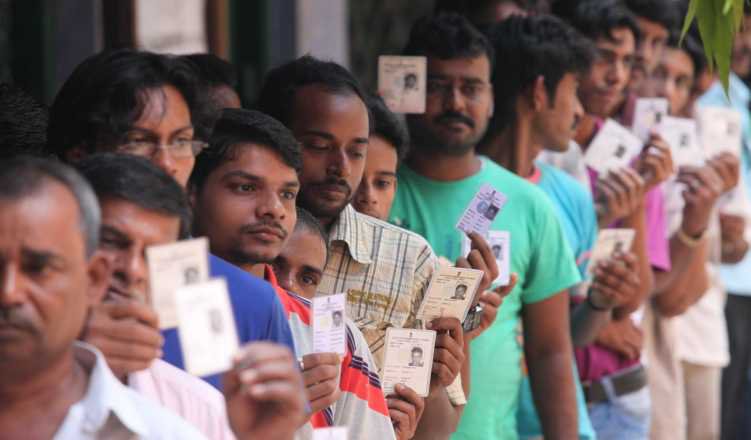
As Lok Sabha elections are over, here are some of the interesting facts about this year's elections.

1. The ECI has set up a total of 10 lakh polling stations across the country, 10% more than 2014.


2. In a first, candidates with criminal antecedents have to advertise their criminal records in newspapers and through television channels.

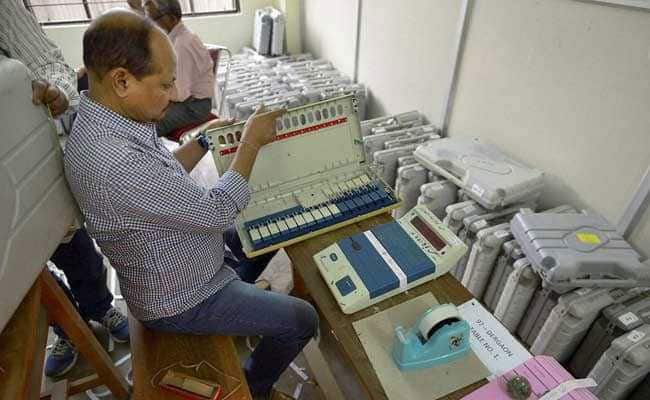
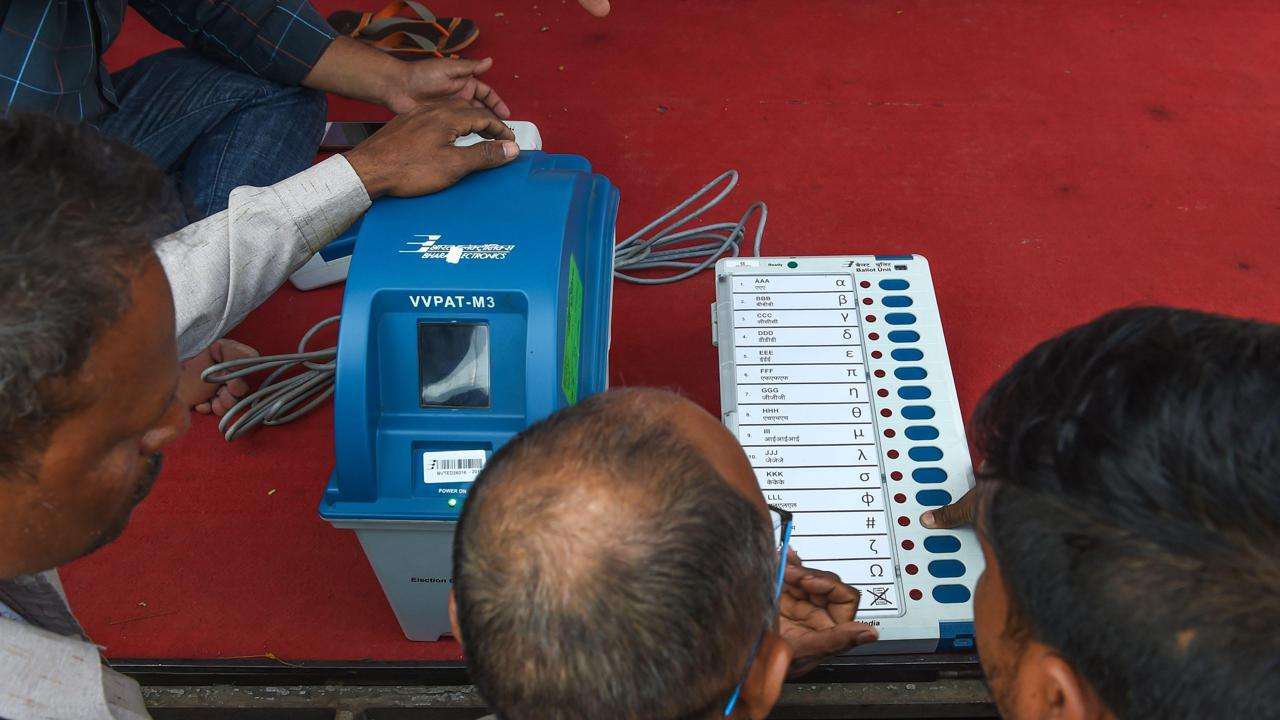
3. For the first time, the EVMs and postal ballot papers would carry the photographs of all the candidates along with their party names and symbols.


Source: Inkhabar

4. For the first time, Voter Verifiable Paper Audit Trail (VVPAT) will be used in all EVMs across the country.


Source: The Hindu

5. Around 900 million people are eligible to vote in this election, which is nearly the total population of Europe and Brazil, combined.


Source: Greater Jammu

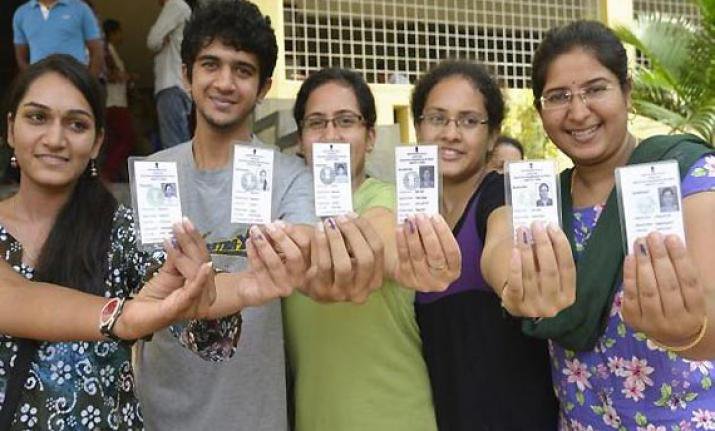
6. 84.3 million people are supposed to be casting their votes for the first time in Lok Sabha polls 2019.


Source: India TV

7. 15 million voters voters between 18 and 19 years of age are supposed to be casting their votes in this year's election.


Source: Business Standard

8. For the first time, 12 big-sized EVMs will be used at every polling booth ,in the Nizamabad district of Telangana, as a whopping 185 candidates compete.


Source: NDTV

9. The richest candidate in Phase 1 of elections is KV Reddy, with family assets of ₹895 crore.


Source: Hindustan Times

10. The poorest candidate in Phase 1 of elections is Nalla Prem Kumar with declared assets of ₹500.

Source: Hindustan Times

11. Interestingly, the richest and the poorest candidates are contesting against each other from the same seat.

Source: DNA India

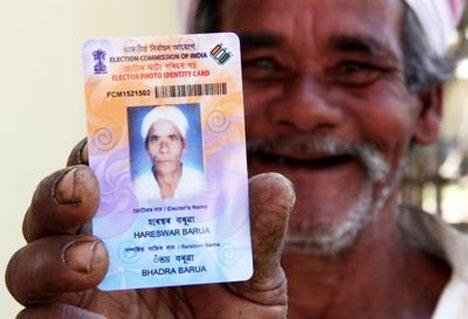
12. A voter can now carry any of the 12 approved identity cards to the polling station and not just the voter slip.

Source: Reddit

13. At 15,256 ft., the world’s highest polling station is in India.

Tashigang in Himachal Pradesh is the highest polling station in the world and falls in Buddhist-dominated Lahaul-Spiti region.

Source: Hindustan Times

14. Reportedly, a group of election personnel will hike for an entire day to reach a lone voter in Arunachal Pradesh this time.

Source: Twitter

15. This would be the longest election in the country in terms of the number of days the polling is held for.

The 2019 Lok Sabha polls were conducted in seven phases spread across 39 days. Previously, the 2014 Lok Sabha elections were spread over 36 days.
Source: India Today

Source : www.Scoopwhoop.com 

Thursday, 16 May 2019

How to Stop Worrying About What Other People Think of You


If you want to be your best and perform at a high level, fear of people’s opinions may be holding you back.
Think about a time when you were extremely anxious — say, before standing up to publicly speak, raising your hand in a big meeting, or even walking through a room of strangers. The reason you felt small and scared and tense is you were worried about social disapproval.
Our fear of other people’s opinions, or FOPO as I call it, has become an irrational and unproductive obsession in the modern world, and its negative effects reach far beyond performance.
If you start paying less and less attention to what makes you you — your talents, beliefs, and values — and start conforming to what others may or may not think, you’ll harm your potential. You’ll start playing it safe because you’re afraid of what will happen on the other side of the critique. You’ll fear being ridiculed or rejected. When challenged, you’ll surrender your viewpoint. You won’t raise your hand when you can’t control the outcome. You won’t go for that promotion because you won’t think you’re qualified.
Unfortunately, FOPO is part of the human condition since we’re operating with an ancient brain. A craving for social approval made our ancestors cautious and savvy; thousands of years ago, if the responsibility for the failed hunt fell on your shoulders, your place in the tribe could be threatened. The desire to fit in and the paralyzing fear of being disliked undermine our ability to pursue the lives we want to create.
This underscores why we need to train and condition our mind — so the tail is not wagging the dog.
If you find yourself experiencing FOPO, there are ways to dampen the intensity of your stress responses. Once you’re aware of your thoughts, guide yourself toward confidence-building statements (I am a good public speaker, I’ve put in the work so that I can trust my abilities, I have a lot of great things to say, I’m completely prepared for this promotion). These statements will help you focus on your skills and abilities rather than others’ opinions. Take deep breaths, too. This will signal to your brain that you’re not in immediate danger.
But, if you really want to conquer FOPO, you’ll need to cultivate more self-awareness. Most of us go through life with a general sense of who we are, and, in a lot of circumstances, that’s enough. We get by. But if you want to be your best while being less fearful of people’s opinions, you need to develop a stronger and much deeper sense of who you are.
You can start by developing a personal philosophy — a word or phrase that expresses your basic beliefs and values. The personal philosophy of Pete Carroll, my business partner and head coach of the Seattle Seahawks, is “always compete.” For Coach Carroll, always competing means spending every day working hard to get better and reach his fullest potential. This philosophy isn’t a platitude or slogan; rather, it’s his compass, guiding his actions, thoughts, and decisions. As a coach. A father. A friend. In every area of life.
When coming up with a personal philosophy, ask yourself a series of questions:
When I’m at my best, what beliefs lie just beneath the surface of my thoughts and actions?
Who are people that demonstrate characteristics and qualities that are in alignment with mine?
What are those qualities?
What are your favorite quotes? Your favorite words?
Once you’ve answered these questions, circle the words that stand out to you and cross out the ones that don’t. After studying what’s left, try to come up with a phrase or sentence that lines up with exactly who you are and how you want to live your life. Share the draft with a loved one, ask for input, and fine-tune your philosophy from there. Then commit it to memory and return to it daily.
Crafting a personal philosophy can be an eye-opening and powerful exercise. When I coach teams of executives, I often ask them to write down their personal philosophy and share it with the group.  I’ll never forget the time a senior executive wowed everyone in the room. As tears welled up in his eyes, he straightened his back, held his head high, and said, “My philosophy is to walk worthy.” He told his colleagues that his parents were immigrants who had persevered through challenging circumstances to ensure he had better opportunities. Because of his parents’ hard work and sacrifice, he considered it his duty to live life as if his family crest were emblazoned across his chest. Every day, he tries to be worthy of their good deeds, and to be a great role model for the next generation.
I can’t overstate how important a personal philosophy is. Working with NFL players and coaches, extreme-sport athletes, and senior leaders at Fortune 50 companies, I’ve noticed that, beyond a relentless pursuit of being their best, what makes these high performers great is their clear sense of the principles that guide them. Because of their clarity, they’re more willing to push themselves, learn more, and embrace discomfort. They can shut out the noise and opinions of fans and media and listen to their own well-calibrated, internal compass.
Once you’ve developed your own personal philosophy, commit yourself to live in accordance with its tenets. Start at home. Tell that person you love them. Dance at a wedding. Take risks. Be respectfully weird. (That probably means, be you.) Then try it at work. Give a presentation. Go for that promotion. Do things that will engender the opinions of others. When you feel the power of FOPO holding you back, simply acknowledge it, and re-connect to your philosophy and the larger objective at hand.
Moving forward, solicit feedback from a short list of people who matter to you. Honest reflection is a vital component of mastery. During an episode of my podcast, “Finding Mastery,” BrenĂ© Brown, a renowned researcher and author of Dare to Lead, suggested that the names of those people should fit on a 1×1 inch index card. I add a second condition. The people on your card should have a great sense of the person you are and the person you’re working to become. Hold their views in high regard, letting the noise from the crowd fade away. Calibrate their feedback with your experience.
Most of all, remember that growth and learning take place when you’re operating at the edge of your capacity. Like blowing up a nearly inflated balloon, living in accordance with your personal philosophy will require more effort and power, but, the result, which is to authentically and artistically express who you are, will push you to live and work with more purpose and meaning.
Source: HBR May 02, 2019